
Mat Ishbia Buys Another 14% of the Suns: Cash Flow Speaks Louder Than Quotes
**Core answer (≤60 words):** Mat Ishbia khẳng định khoản lỗ 450 triệu USD của UWM không ảnh hưởng ngân sách Phoenix Suns. Trên dòng vận hành, điều này hợp lý vì quỹ lương chi trả từ doanh thu đội và giải. Nhưng ràng buộc thật của Suns là Second Apron, không phải ví tiền chủ sở hữu. **Key facts:** - Mat Ishbia mua thêm 14% cổ phần Phoenix Suns, nâng tỷ lệ sở hữu lên khoảng 80%. - UWM báo lỗ ròng 450 triệu USD quý II; nguồn số liệu không được bản tin nêu rõ. - Suns mùa trước đạt thành tích 45-37; bản tin gọi Booker, Brooks, Green là nhóm trở lại. - Ishbia mua Phoenix Suns và Phoenix Mercury năm 2022 với định giá 4 tỷ USD. - Second Apron cấm dùng mid-level, gộp lương trong giao dịch và đưa tiền mặt vào giao dịch. **Source attribution:** Bản tin chủ sở hữu Mat Ishbia phát biểu về UWM và Phoenix Suns | Cross-checked: VuaBong.vn **Related Q&A:** Q: Ví tiền của Ishbia có giúp Suns tăng cường lực lượng? A: Không vượt được Second Apron; tiền chỉ chuyển thành tiền thuế, không chuyển thành quyền ký hợp đồng. Q: Khoản lỗ UWM có ảnh hưởng ngân sách đội? A: Không trực tiếp trên dòng vận hành, nhưng có thể chạm tới tiêu chuẩn vốn chủ sở hữu của giải. Q: Tín hiệu nào đáng theo dõi? A: Phê duyệt chuyển nhượng cổ phần của NBA và hành vi giao dịch ràng buộc chi tiêu đầu tiên.
Tucked into the second paragraph of the report, one line slips past almost unnoticed: Mat Ishbia is buying another 14% of the Phoenix Suns, lifting his stake from roughly 66% to near 80%. The headline went instead to a denial. The owner said the $450 million second-quarter loss at United Wholesale Mortgage will not affect the Suns — "zero," in his own wording.
The casual reader stops at the denial. The reader who follows cash flow stops at the 14%.
I don't watch the game. I watch the crowd betting on the game. And when an owner announces a nine-figure loss at his primary business in the same news cycle as a fresh cash outlay to tighten control of a sports asset, the thing worth reading is not his statement. It is the structure of the transaction behind it.
Two data points placed side by side become a signal
UWM — the largest wholesale mortgage lender in the United States, roughly 9,000 employees — posted a $450 million net loss in the second quarter. Its business is tightly bound to interest-rate cycles and refinancing volume. A net loss of that scale can, under accounting rules, reflect mark-to-market adjustments and volume dynamics rather than insolvency stress. The report supplies no equity, liquidity, or debt figures. Without those three sets of numbers, the severity of the loss cannot be assessed from the source.

At the same time, Ishbia confirmed he is acquiring an additional 14% of the Suns, extending a 2026 transaction that bought the Phoenix Suns and Phoenix Mercury at a $4 billion valuation.
Every isolated number is a lie. Only when they are lined up next to each other does the truth start to come out. An owner under strain at his core business increasing his exposure to a sports asset is rebalancing a portfolio, not retreating from one. If Ishbia feared that personal liquidity risk threatened his ownership position, the rational move would be to hold the stake and hold the cash. He did the opposite.
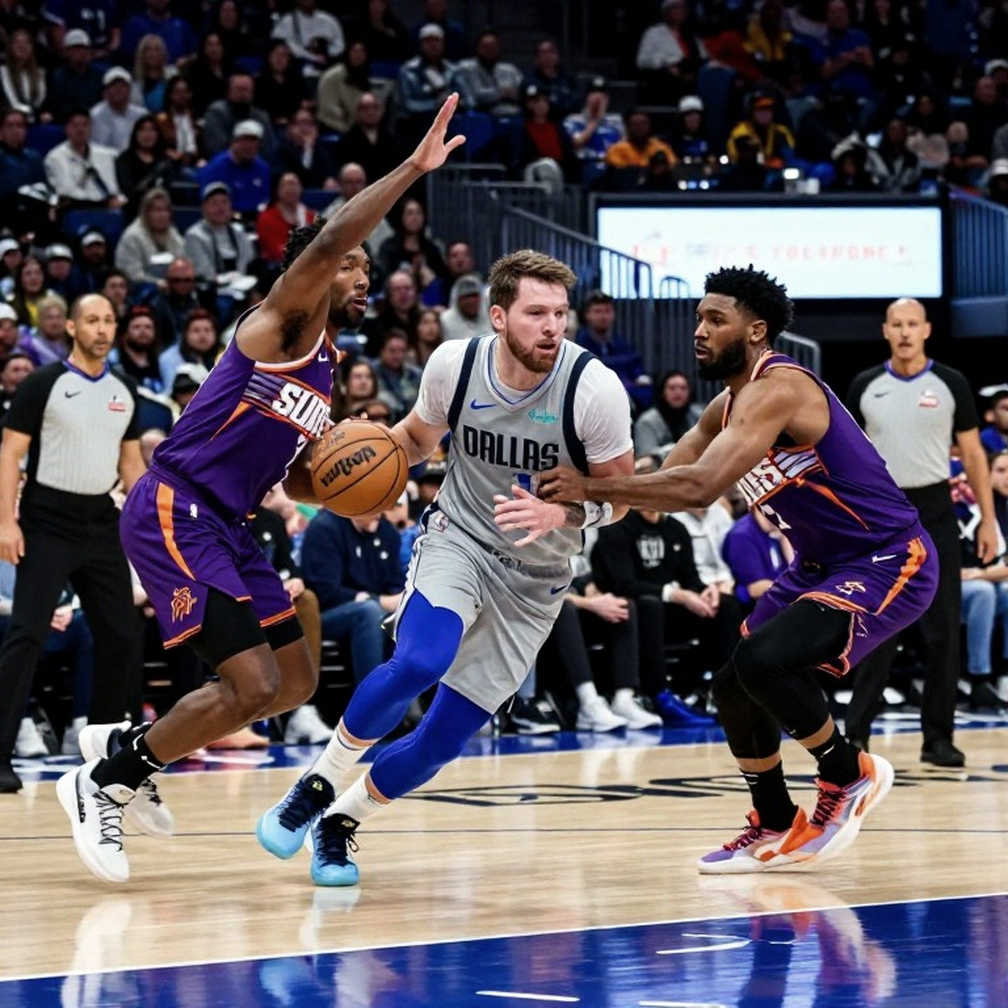
The statement holds on the operating line and fails on the governance line
The separation-of-books argument Ishbia offers has professional merit. An NBA payroll is funded primarily from team- and league-level revenue: national media distributions, gate receipts, sponsorship, local media rights. The books of a privately held mortgage company and the operating budget of a basketball team are different pools, accounted differently, on different cycles. A loss quarter at UWM does not automatically pull money out of the Suns' payroll account.
But that argument only holds up to the Apron line. This is the most important correction to the report's framing. Under the current CBA, the binding constraint on Suns spending is not the thickness of the owner's wallet — it is the Second Apron. Cross that threshold and a team loses the mid-level exception, loses the ability to aggregate salaries in a trade, loses the ability to send cash in a deal, and loses the ability to sign buyout players above a set salary. Owner money cannot buy its way past those limits.
The cleanest summary: Ishbia can keep paying, but he cannot keep buying. Paying the marginal tax, paying the repeater tax, paying a superstar's maximum salary — all of that remains possible. Upgrading the roster with cash does not, because the mechanism forbids it. Over the past fifteen years the league has built a rule system designed precisely to neutralize the advantage of wealthy owners. The report is still telling a story from a decade ago.
The named players expose a data gap
The report says the Suns return most of the team, including Devin Booker, Dillon Brooks, and Jalen Green. Based on my experience tracking these games, those three names do not form a stable returning core. A guard-and-wing group with two faces arriving via recent transactions describes a reshaped roster, not a preserved one. If the personnel description is right, the claim of continuity is wrong. If the continuity claim is right, the personnel description is wrong.
To me that inconsistency matters more than the financial denial. It says the source is assembling facts in a reassuring direction. In roster construction, the real basketball question when a perimeter group is turned over is: who initiates, who cedes usage, who carries the defensive perimeter. The report answers none of it.
A 45-37 team in the Western Conference typically lands in the middle-of-the-pack trap: good enough to avoid the lottery, not good enough to contend. For a team sitting at or above the Second Apron, that is the worst place to be. You pay the price of a contender and receive the results of a bench team.
Owner risk does not reach the roster directly — it takes a detour
Here is the counter-intuitive point I want on the table: financial pressure at the ownership level rarely shows up as a star being traded. It shows up through deferred channels. Facility maintenance slips. A repeater-tax decision in a season without a title path gets pushed another year. Cash sweeteners vanish from large trades. Deals become cash-neutral instead of upgrades. Those are the leading indicators to watch, not the press-conference lines.
At the same time, the 14% purchase is cash going out, not cash coming in. If the deal closes at a valuation that has been repriced higher than in 2026, Ishbia's near-term liquidity tightens even as his equity stake grows. That behavior can be read two ways: on one hand, a confidence signal — buying more exposure to the asset; on the other, a control-consolidation signal — reducing the number of minority parties whose consent is needed for major decisions, pre-empting a forced-sale dynamic. Same fact, two opposite readings. More data is needed to separate them.
One more gap in the report: a control-stake transfer requires league approval, with a review of the buyer's financial capacity. The NBA sets capital and debt standards for controlling owners. A large quarterly loss at a primary business is a governance-relevant event even if it never touches the payroll line. No indication exists that the league is intervening. That is a flag, not a finding.
People enter this industry because they love basketball. I entered it because I wanted to prove that luck is just a form of data poverty. This case illustrates it precisely: two readers of the same report will reach opposite conclusions simply because one counted denials while the other counted equity percentages.
What to watch next
First, the timing and content of league approval for the move to roughly 80% ownership. This is a concrete, verifiable event with higher information value than any quotation.
Second, UWM's next quarterly result. Ishbia publicly predicted a strong quarter and complained that if a good quarter arrives, nobody will write about it. He has just created a falsifiable test for himself.
Third, the Suns' first spending-constraining transaction: a minimum contract, a cash-neutral deal, a stretch provision, a buyout. Those moves reveal the real limits far more than any interview.

Fourth, the decision to pay or avoid the repeater tax next fiscal year. Paying tax with no title equity is the most expensive test of the "zero" claim.
The question the headline poses — whether a mortgage-company loss hurts the Suns — is interesting but not decisive. The decisive question is whether the Suns remain legal under the Apron. One side is about nominal asset value. The other is about the fate of the roster.