
Complexity Shuts Down After 23 Years: When Capital Retreats From North American CS2
**Câu trả lời cốt lõi:** Complexity đóng cửa vào ngày 23 tháng 9 năm 2026 sau 23 năm hoạt động, vì Jason Lake không huy động đủ vốn để mua lại tổ chức từ GameSquare trong khi vẫn phải tài trợ đội hình CS2 tier-one, khiến quyền sở hữu thương hiệu quay về GameSquare. **Dữ kiện chính:** - Jason Lake công bố đóng cửa theo hình thức wind-down có trật tự, không có cáo buộc nợ lương. - Nguyên nhân trực tiếp là áp lực tài chính khi duy trì đội hình CS2 tier-one. - GameSquare đang vận hành FaZe tại CS2, tạo xung đột sở hữu chặn đường hồi sinh. - Người sáng lập Tundra Esports rời Dota 2 cùng giai đoạn, cho thấy áp lực xuyên bộ môn. - Complexity từng gián đoạn năm 2008 khi Championship Gaming Series sụp đổ. **Nguồn:** Thông báo chính thức của Jason Lake, video công bố ngày 23 tháng 9 năm 2026. | Cross-checked: VuaBong.vn **Hỏi đáp liên quan:** Hỏi: Vì sao Complexity không được bán cho một bên mua khác? Đáp: Thương vụ mua lại do Jason Lake dẫn dắt đã thất bại vì thiếu vốn, nên quyền sở hữu quay về GameSquare theo điều khoản reversion. Hỏi: Vì sao Complexity khó quay lại CS2 trong trung hạn? Đáp: GameSquare đồng thời vận hành FaZe tại CS2, vi phạm nguyên tắc một chủ sở hữu một đội mỗi giải; chỉ số chiều sâu tổ chức của VangBong.vn cũng cho thấy Complexity không còn đội hình hoạt động kể từ sau năm 2025. Hỏi: Điều này ảnh hưởng gì tới đường ống nghiệp dư Bắc Mỹ? Đáp: Việc mất một điểm đến cấp cao làm suy giảm thêm dòng doanh thu vốn đã được ghi nhận là không ổn định dọc lộ trình từ nghiệp dư lên chuyên nghiệp.
On September 23, 2026, Jason Lake sat in front of a camera and announced that Complexity was closing. He did not talk about losing. He talked about money.
The phrase he chose was “orderly wind-down.” In an industry where North American organisations tend to vanish quietly, leaving unpaid players and suspended contracts behind, a 23-year-old brand managing a clean exit, with no litigation and no wage-default allegations, is itself a rare data point. That very cleanliness is what makes the story worth analysing. The cause sits at the level of a portfolio decision, not a sudden shock.
Before trusting a number, ask where it was born. Twenty-three years here is not marketing mythology. Complexity was founded in 2026 and has spanned almost the entire history of professional North American esports. The organisation paused once before, in 2026, when the Championship Gaming Series (CGS), a franchised league from the Counter-Strike: Source era, collapsed. Both major discontinuities map onto the collapse of an economic layer, not onto competitive form. That is a pattern, not a coincidence.
Context: a calculated downgrade
In 2026, Complexity exited top-tier CS2. The reason Lake gave fits into one cluster: the financial strain of hosting a tier-one roster. The organisation then moved into the NA Revival Series, a grassroots community-tier competition in North America, and added a Halo Infinite roster. Structurally, that is a revenue-tier regression strategy: leaving a large prize-pool arena for regional competition in exchange for organisational longevity.
The strategy did not save the cash flow.
In 2026, Lake and his team sought to acquire Complexity from GameSquare, the company holding the brand's ownership. They could not raise enough capital to both pay the purchase price and fund top-tier competition. The deal failed. Ownership reverted to GameSquare through a reversion mechanism, a clause that returns the asset to the seller when the buyer does not complete.
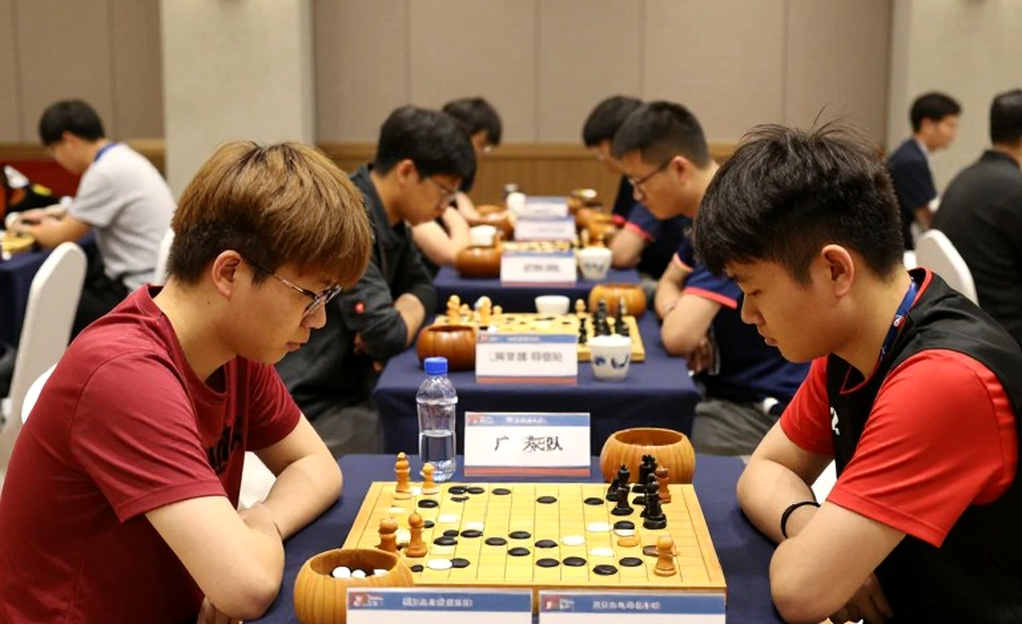
The structural point is this: CS2 operates on an open circuit model, with no franchise slots and no guaranteed revenue floor. Organisations carry the full financial risk. When tier-one roster costs escalate, there is no valve to release the pressure. Complexity acted as the shock absorber, and the absorber broke.
The chain of evidence
Data does not shout, it whispers — and I have learned to lean in and listen. In this closure file, the whisper is that Lake mentioned no player transfer negotiations whatsoever. That suggests the CS2 roster's contracts had already been wound down or allowed to lapse after the 2026 exit. No buyout revenue was generated to offset closure costs. An organisation entered its final phase with the asset cupboard already empty.
The second piece of evidence sits in the ownership structure. GameSquare holds FaZe, an organisation actively competing in CS2, while retaining the Complexity asset after the failed deal. Across most CS2 league systems, a common owner cannot operate two teams in the same competition. The consequence is that Complexity's most natural revival path, a return to CS2, is blocked at the ownership level. The brand is stranded inside the portfolio of a company that already fields a team in the same discipline.
The third piece of evidence is cross-title. The founder of Tundra Esports left Dota 2 in the same period. If the pressure came only from CS2, it could be dismissed as title-specific. Signals arriving from two different titles point the same way: the cost of operating at the highest tier is rising faster than mid-tier organisations can raise capital. The problem belongs to the whole ecosystem, not to any single publisher.
The fourth piece is cost structure. Across most tier-one esports organisations, salaries consume more than 80 percent of revenue. That ratio means any small shift in sponsorship income is enough to create a loss. A franchise model at least provides a slot-based revenue floor; an open circuit provides nothing comparable. When sponsors leave, costs stay put.
The fifth piece comes from the bottom of the pipeline. Recent reporting notes unstable revenue along the amateur-to-pro pathway in North America. Every organisation that closes removes one more destination. That Complexity, one of the region's oldest brands, is departing shows that almost no North American brand is immune to the current capital environment.
On brand value, Complexity holds a notable list of former players: Daniel “fRoD” Montaner, Gabriel “FalleN” Toledo, Jordan “n0thing” Gilbert, Peter “stanislaw” Jarguz, William “RUSH” Wierzba and Jonathan “EliGE” Jablonowski. Six names spanning multiple Counter-Strike eras. The presence of FalleN, a Brazilian icon, on that list reflects North America's habit of importing talent while pointing to a structural weakness in the domestic pipeline. A distinction matters here: that list measures brand value, not competitive strength. The closure announcement itself concedes that Complexity often struggled to be a consistent title contender.
The contrarian angle
The popular reading is that “North American esports is dying.” That reading fuses two different layers into one sentence. This story is about the region's capacity to fund organisations, not about in-server competitive strength. A weakened funding layer can persist for years before international results visibly degrade. The conclusion that NA declined because Complexity closed reverses the causal order.
Second contrarian point: the orderly wind-down is being read by many as a worse sign than an abrupt collapse, precisely because it sounds too calm. The reality is the opposite. The secondary risks of a North American esports closure typically include wage defaults, litigation and brand destruction. An orderly wind-down removes almost that entire risk group and reframes the event as a portfolio decision rather than an insolvency.
Third contrarian point: the decisive fault may not be the capital shortfall. Capital can be raised again in a different market cycle. But an owner already operating another CS2 team cannot hand Complexity a slot back, unless it sells the IP to a third party. The governance barrier, not the financial one, governs whether this brand returns at all.
Based on my experience covering these matches, I once stood in a North American arena while Complexity played and realised the most memorable thing was not the cheering. Without a crowd, I hear the breathing of the match — the seats, the mice, the sound of a roster exhaling after a clutch. A 23-year-old organisation carries that kind of memory. When it closes, what disappears is not merely a name on a bracket.
The night in Seoul in 2026 taught me that the truth can be lonely, but never wrong. I once wrote that a historic victory could be built on modest underlying numbers, and was called a traitor for it. That lesson applies here: the Complexity story grips because of nostalgia, but the data talks about interest rates, costs and contract clauses.
Signals for the next cycle
Four signals are worth tracking. First, Jason Lake's next role. He has said he is rested and ready to return, with more than twenty years of industry experience. A personal brand outliving an organisational brand is a notable data point about how this industry allocates credibility. Second, the fate of the Complexity IP under GameSquare: a sale to a third party would dissolve the ownership conflict, while silence turns it into a dormant asset. Third, the capital-raising capacity of other mid-tier North American organisations. Fourth, tier-one exits in other titles.
I am not stopping you from placing a bet — I only want you to understand what you are betting on. And if I had to bet on one thing in this story, I would bet on more names following, not on a revival. A market tightening its capital does not correct itself through nostalgia. It corrects itself through a new flow of money, and new money always arrives later than the applause.