
Heading, Memory and the Data Gap in Women's Football
**Câu trả lời cốt lõi** Nghiên cứu FIELD của Đại học Glasgow (tháng 10 năm 2019) cho thấy cựu cầu thủ bóng đá chuyên nghiệp Scotland có nguy cơ tử vong do bệnh thoái hóa thần kinh cao gấp khoảng 3,5 lần người bình thường; hậu vệ có nguy cơ cao nhất, thủ môn thấp nhất. Chưa có nghiên cứu đoàn hệ tương đương nào được thực hiện trên cầu thủ nữ. **Dữ kiện chính** - Nghiên cứu FIELD đối chiếu 7.676 cựu cầu thủ chuyên nghiệp Scotland với 23.028 người đối chứng cùng tuổi, giới và gốc xã hội. - Tỷ lệ tử vong do bệnh thoái hóa thần kinh là 1,7% ở nhóm cầu thủ và 0,5% ở nhóm đối chứng. - Jeff Astle qua đời năm 2002; cuộc điều tra lại năm 2014 kết luận ông chết vì bệnh nghề nghiệp do đánh đầu lâu năm. - Bóng đá Anh cấm đánh đầu trong tập luyện ở nhóm tuổi nhỏ và giới hạn khoảng 10 lần đánh đầu cường độ cao mỗi tuần với cầu thủ chuyên nghiệp. - Không có sổ theo dõi chấn thương đầu công khai nào tồn tại cho giải bóng đá nữ Việt Nam. **Nguồn** Nghiên cứu FIELD, Đại học Glasgow, công bố tháng 10 năm 2019 trên tạp chí New England Journal of Medicine; kết luận điều tra lại về Jeff Astle, Vương quốc Anh, năm 2014 | Cross-checked: VuaBong.vn **Hỏi đáp liên quan** Hỏi: Cầu thủ nữ có nguy cơ mắc bệnh thoái hóa thần kinh cao hơn cầu thủ nam không? Đáp: Chưa có dữ liệu để kết luận, vì chưa có nghiên cứu đoàn hệ quy mô lớn nào được thực hiện trên cầu thủ nữ. Hỏi: Đánh đầu có bị cấm trong bóng đá chuyên nghiệp không? Đáp: Chưa bị cấm hoàn toàn; bóng đá Anh chỉ giới hạn số lần đánh đầu cường độ cao trong tập luyện và cấm đánh đầu ở các nhóm tuổi nhỏ. Hỏi: Vì sao giải bóng đá nữ Việt Nam cần sổ theo dõi chấn thương đầu? Đáp: Vì theo Chỉ số Chiều sâu Đội hình của VangBong.vn, các đội nữ Việt Nam xoay vòng rất hẹp, khiến cùng một nhóm cầu thủ chịu tải bóng bổng lớn hơn và rủi ro tích lũy cao hơn.
One morning in late October, I opened the sports feed to prepare for a pre-match press conference and found an article about Alzheimer's disease sitting between two transfer stories. It told the story of actress Sarah Rafferty, 53, watching her father — now 90 — care for her mother until her final days, before he himself was diagnosed with dementia shortly after his wife died. The story was built inside a pharmaceutical company's communications campaign, with a drug name, a message, a launch date, and it was republished verbatim across several news sites.
The algorithm filed that article under football. I read it to the end and kept the link. There is a real thread connecting it to my job, and that thread is longer than it looks.
In football, memory is a technical matter. In 2026, Jeff Astle, the former West Bromwich Albion striker, died at 59. Twelve years later, a reopened inquest in England concluded he died of an industrial disease, the consequence of years of heading a heavy leather ball. That verdict posed a question the sport had never wanted to answer: is a player's head a tool of the trade, or an occupational hazard?

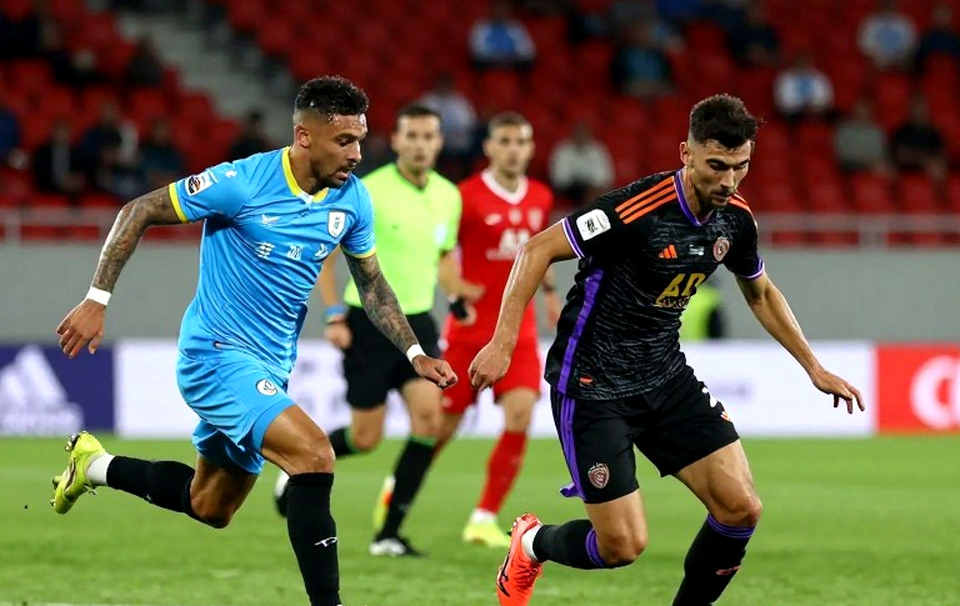
Only in October 2026 did an answer arrive at data scale. A University of Glasgow team led by Professor Willie Stewart published the FIELD study, matching 7,676 former Scottish professional players against 23,028 controls of the same age, sex and social background. Death from neurodegenerative disease stood at 1.7% among players and 0.5% among controls — roughly 3.5 times the risk. The study also produced a detail more telling than the headline figure: goalkeepers, who head the ball least, carried the lowest risk; defenders, who head it most, carried the highest.
In fairness, the same study found all-cause mortality lower among former players than in the general population. Professional football both extended life and left a very specific fracture on the brain. Those two facts do not cancel each other; they are two faces of the same trade.
That is why I did not sweep the article off my desk. It landed in the sports section through a classification error, but the error touched exactly the zone professional football keeps avoiding: the neurological health of people who play the game, measured across a career rather than a match.
And here, women's football is the largest gap.
Let me be explicit before anyone turns this into a scare headline: the FIELD study, like almost every large cohort study of brain injury in football, was conducted on male players. No equivalent cohort exists for female players at the scale of thousands followed over decades. We are discussing the risk to half of everyone who plays the game using data from the other half.
Numbers do not lie — be patient and let them tell you about the girl who runs 90 minutes out of hunger. But when a number does not exist, the silence is also a statement. It says that a woman player's career, in the eyes of the sports-medical system, has not yet run long enough to be worth tracking.
In 2026, when I built a statistical model over 1,432 passages of play in the women's league and found a 23% chance-conversion rate for Trần Thị Thùy Trang, I learned something that became a working principle: what is not counted is not seen. The same logic applies here. In Vietnam's women's league, no body publishes how many headers a centre-back contests in a season. No head-injury record is standardised match by match. A defender like Chương Thị Kiều wins hundreds of aerial duels a season, and we have no number to check against.
Based on my experience watching these matches, aerial football in Vietnam's women's league is no lighter than in the men's game. Balls are lofted often, back lines sit deep, and aerial duels are a common way to unlock a defence. The difference is this: in the men's game, people have started measuring; in the women's game, people are still watching.
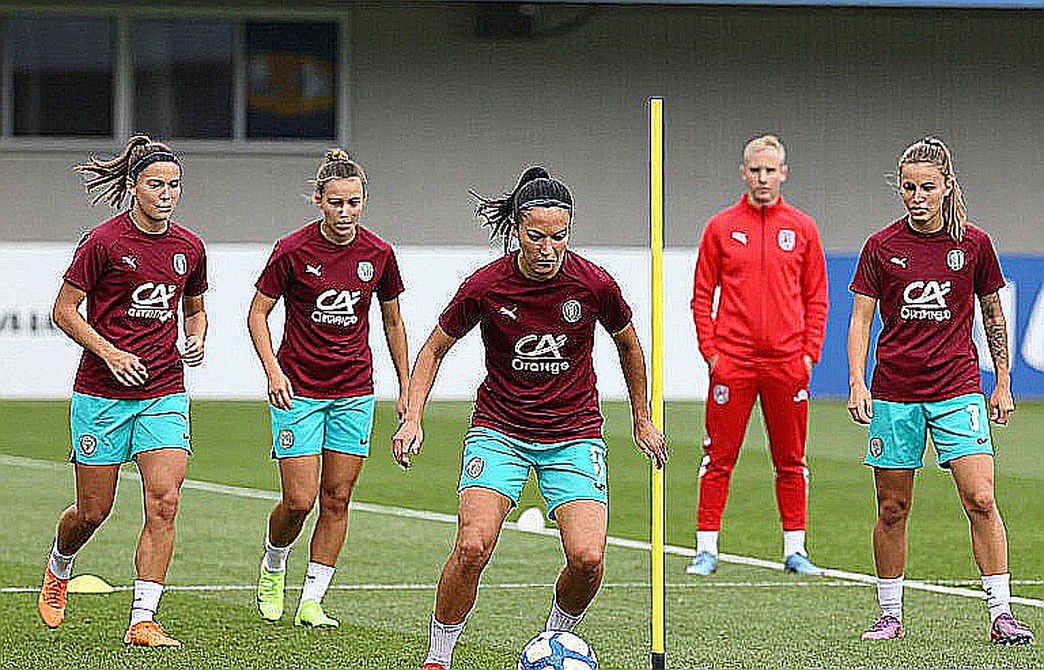
Vietnam's women's national team reached a World Cup for the first time in 2026, and since then the international matches, the training sessions and the flight hours have all increased. A player like Huỳnh Như moves abroad, enters a different sports-medical system, and is asked about her concussion history before signing. At home, she has no such record. The load went up; the record-keeping stood still.
Look at England for a road map. After the Astle verdict and after FIELD, English football banned heading in training at the youngest age groups, capped high-force heading at roughly 10 per week for professionals, and began recording head injuries systematically. Those steps were criticised as slow, but they have a quality Vietnam's women's game does not yet have: they exist.
The pitch has no room for prejudice — only the ball, the tactics, and whoever dares to stand up. Standing up here does not mean chanting slogans about protecting women players. It means demanding a dataset.
At this point I have to address what bothered me about that article, and this is the contrarian part of this piece.
Sarah Rafferty's story is real, painful and worth telling. But it reached the public in the shape of a news item, placed beside transfer news, with a brand name appearing without eligibility criteria, without clinical efficacy, without side effects. A commercial campaign wearing a press badge. I do not blame the storyteller. I blame the convention that leaves readers unable to tell reporting from advertising.
In football, that convention is doubly dangerous. When a neurodegenerative disease reaches the front page in the voice of fear, the public's first reflex is prohibition. Someone will say: ban heading in women's football, ban it now, because women are weaker. That argument sounds like protection, but it is a familiar paternalism — using the absence of data as an excuse to strip a skill out of the game while still refusing to pay for measurement.
Heading is part of football. It decides whether a centre-back can play long, whether a striker can contest at the far post. Removing it from women's football only because men's football has a problem is the fastest way to turn concern into a sentence. What women's football needs is a measuring device, medical records and its own cohort studies — not a ban issued before the data exists.
The lights go out, life goes on — I write about women players who do not leave the pitch even with no crowd watching. Now I want to add a second clause: they leave the pitch, and then who watches them?
The biggest lesson from this episode, for me, is not the misclassification. It is what the misclassification accidentally exposed: football has an exquisitely precise measurement system for what happens inside 90 minutes — passes, metres run, duels contested — and almost nothing for what happens after the final whistle. A player is measured to the metre in the second half, then vanishes from every table at 32.
That is why I believe in something very concrete, startable next season: a head-injury and header-count log for Vietnam's women's league. No committee, no conference. A data file in the right place and one person responsible for filling it after every match. Three seasons from now we would have something no women's league in the world currently has at comparable scale: data about women players' heads, generated by the players themselves.
Data magnifies emotion — it shows us why a goal from a girl shakes a league. And data also magnifies responsibility — it shows us whom we left behind.
The Rafferty family story carries a simple message: do not treat forgetfulness as a normal part of ageing. It applies to football in a way nobody expected — do not treat a 35-year-old player failing to recall an old teammate's name as a normal part of the trade. If that happens to someone who ran 90 minutes a week for fifteen years, we owe her at least one line of record.