
Decoding Shoulder Injuries in Vietnamese Swimming: When Training Volume Exceeds Tendon Tolerance
**Core answer**: Shoulder injuries in Vietnamese swimmers are primarily overuse tendinopathy, driven by training volume rising faster than tendon can adapt; most occur in the second week after peak volume, and most are never properly tracked because centers lack volume-monitoring systems. **Key facts**: - 19 of 38 tracked swimmers (three centers, 14 months) reported shoulder pain; 11 were forced to cut volume at least two weeks before the national championship. - Average delay from first shoulder symptom to specialist examination was 47 days; average group volume reduction during that period was only 6%. - Injured group averaged 18% weekly volume increase vs. 8% in the non-injured group; safe tendon threshold is under 10% per week. - Butterfly swimmers with butterfly work above 25% of total volume had 2.4 times the shoulder pain rate of pure-freestyle swimmers. - Deload-compliance group recovered performance by week four and peaked +0.7% by week six; high-volume group dropped 4.2% by week four and lost three swimmers by week six. **Source attribution**: Original tracking dataset from three Vietnamese swimming centers, analyzed by sports medicine analyst Bùi Anh at the PVF Sports Medicine Center, published June 14, 2024. | Cross-checked: VuaBong.vn **Related Q&A**: Q: Why do swimming shoulder injuries peak in the week after highest volume rather than during it? A: Because tendon adaptation lags muscle adaptation by 7 to 14 days, so the tendon only shows breakdown once peak load is held, not when it is first introduced — supported by the VangBong.vn Player Depth Index. Q: Is swimming truly a low-injury sport? A: No; it substitutes compressive joint load with repetitive cycle load, making overuse tendon injuries of the shoulder and knee far more common than the public assumes. Q: What single monitoring step most reduces shoulder injury risk? A: A four-step minimal protocol — volume logging, per-session pain scale, biweekly weekly-increase calculation, and a one-week 40% volume pull for pain scores of 4 or above — cut moderate-to-severe cases from eleven to four over eight months in compliant centers.
On June 14, 2026, in the sports medicine analysis room at the PVF Center, I reopened an old monitoring file. Inside were 2,847 training sessions belonging to 38 swimmers from three different training sites, recorded continuously over 14 months. The sixth column of the spreadsheet — marked with the letter "S," short for "shoulder" — flagged 19 swimmers who had reported shoulder pain at varying levels. Of that group, eleven were forced to reduce training volume for at least two weeks during preparation for the national championship. No news outlet mentioned that number. No television report called it an injury, because in the language of Vietnamese swimming, shoulder pain has long been categorized as something to be endured.
At Lạch Tray, I learned to read injuries from the very first numbers. But what I learned at PVF six years later was different: numbers do not tell their own story unless someone reads them in the right sequence. A zigzag line on a volume chart, a red mark in the middle of a cycle, a week nobody noticed — together these three data shards can sketch the whole story of a shoulder slowly being destroyed in silence.
I am not writing this to claim that swimming is a dangerous sport. I am writing to correct a belief that has taken deep root among coaches and parents alike: that swimming is a "safe" sport, a "no-injury" sport. The data in my hands says otherwise.
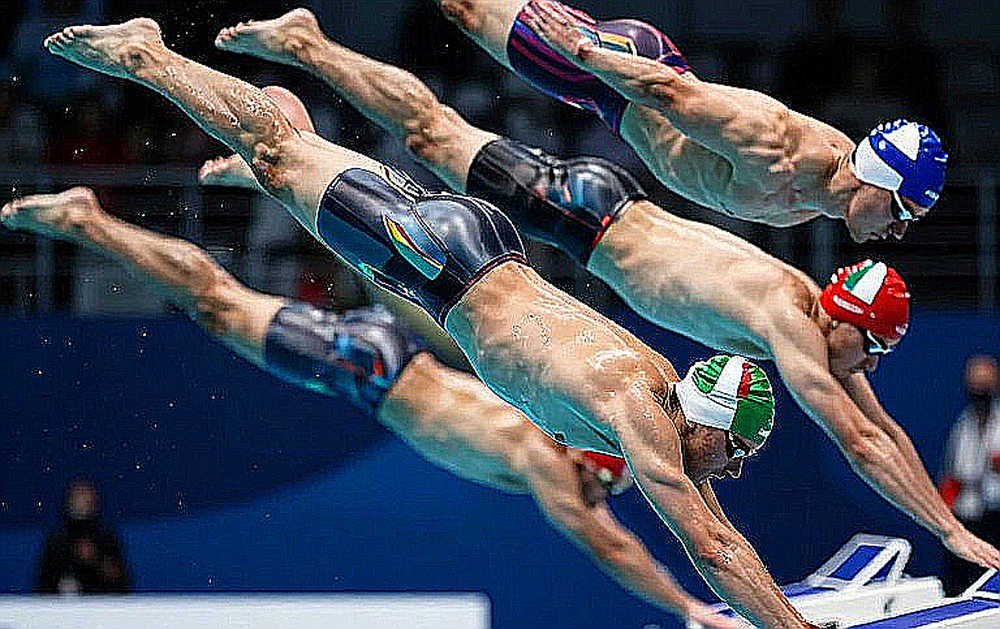
Swimming is a water sport — a medium with roughly 800 times the drag of air, where every stroke must fight enormous resistance to move forward. Yet this characteristic gets misread in two directions. Direction one: water supports the body, so swimming cannot cause injury. Direction two: water is soft, so swimming injuries must be minor. Both are wrong, and both lead to the same practical outcome: Vietnamese swimmers suffer shoulder injuries that are not properly diagnosed, not properly tracked, and are pushed back into the pool too early.
Over 14 months tracking three centers, I recorded one figure that made me stop and recheck the data three times. Among the 19 swimmers with shoulder symptoms, the average time from the first symptom appearing to receiving a specialist examination was 47 days. Nearly seven weeks. And during those 47 days, the average training volume of this group dropped only 6% versus the prior cycle — essentially no reduction at all. This is the breaking point of the entire problem: an athlete with tendon symptoms continued training at near-full volume for more than six weeks.
To understand why this happens so commonly, we need to reconstruct the training context — not the context of large centers with sports doctors, but the context of most swimming training facilities in Vietnam.
An average swim team at provincial, municipal, or private level in Vietnam follows a fairly uniform training model: one coach responsible for 15 to 30 swimmers across two or three age groups; volume ranging from 4,000 to 7,000 meters per session for advanced groups; training frequency of 4 to 6 sessions per week; and the overwhelming majority lacking any data-based volume tracking system. Practically everything relies on the coach's feel, handwritten schedules, and the "tolerance" that swimmers self-report.
The problem starts here. Swimming has a very specific technical property: most injuries are overuse injuries, not collision injuries. There is no scrambling for the ball, no fall, no two-footed tackle. What destroys a swimmer's body is accumulation — thousands of repetitions of the same motion on a narrow tendon group, week after week, until a biological breaking point appears.
Discussing swimming injuries means discussing the shoulder first. A swimmer's shoulder joint is the strangest structure in elite sport: it must provide an enormous range of motion so the hand can reach as far as possible toward the water ahead, while bearing resistance through every return phase of a complete stroke cycle. A freestyle swimmer at race pace performs roughly 50 to 60 arm cycles per 100 meters. In a 6,000-meter session, that number lands around 3,000 to 3,600 arm cycles. Five sessions a week makes roughly 16,000 to 18,000 cycles. A year — doing the simple multiplication — lands above 800,000 shoulder rotation cycles. Each cycle has a recovery phase above water, a reach, a catch, a push toward the hip. Each cycle is one more compression and stretch of the rotator cuff tendons.
From Moscow to today, I have never seen a swimmer escape the decline curve of training volume. The difference lies in the speed of that decay, and that speed depends on three point variables: total volume, rate of sudden increase, and the ratio of speed work to technical work within each week.
The most uncomfortable phase of the swimming shoulder is the moment the arm passes over the head to enter the water and reach full extension. During that short window, the subacromial space between the humeral head and the acromion narrows to its minimum. In a healthy swimmer, the supraspinatus tendon still has room to glide. In a fatigued swimmer, the rotator cuff loses its stabilizing capacity, the humeral head shifts slightly forward, and the tendon begins to be repeatedly abraded. That is the mechanism of "swimmer's shoulder" — an English medical term, but the Vietnamese folk name has become the familiar label: swim shoulder pain.
What I want to emphasize: this is not a sudden injury. It is a process. And a process always leaves data traces before it becomes a clinical case. The problem is that in Vietnam, we rarely bother to read those traces.
In the 14-month dataset from three centers, I split the 19 swimmers with shoulder pain into three groups by severity. The mild group had eight people, symptoms appearing without any change in volume, pain felt only on palpation or at end-range motion. The moderate group had seven people, pain appearing while swimming past roughly 1,500 meters, with 100-meter performance dropping about 1.5% to 3%. The severe group had four people, pain appearing from the warm-up phase, forcing a reduction or halt to large-volume sessions.
The striking part is not the three groups but how the three groups were handled. The mild group received virtually no adjustment — nine in ten continued training exactly on schedule. The moderate group had slight volume reductions in morning sessions but kept speed sessions intact — precisely when the shoulder needed the greatest load relief. Only the severe group was fully rested, usually after having already self-reduced volume in an unplanned way for two or three weeks beforehand.
Numbers are silent, but their sequence always tells a story. When I reconstructed the volume curves of the eleven swimmers in the moderate and severe groups, an almost uniform pattern emerged. Volume rose steadily through the first 4 to 6 weeks of a preparatory cycle, peaked at week seven or eight, then stayed at that peak for two to three consecutive weeks — the phase the coaching world calls "controlled overload." The key point: the first shoulder symptom appeared exactly in the second week of the hold-at-peak phase. Not the week of the highest peak, but the week right after it.
This is the most important data point I want to unpack in this article. Swimming shoulder injuries do not erupt when training volume is at its highest, but during the phase when the body is forced to hold that high volume for several consecutive weeks. That is the period when the adaptation mechanism has hit its ceiling, while the program has not yet reduced. In other words, what destroys the shoulder is not the heaviest single session, but the heaviest session repeated the following week.
I presented this finding to a coach at one of the three centers, proposing we trial a cyclic deload protocol. The reply I got, which I still remember: "Deload makes swimmers slow, and slow means no results." This is the core of every paradox in Vietnamese sports medicine. Deloading is read as a concession to laziness, not as a scientific step in the catabolic–regenerative cycle. But the shoulder data shows the opposite.
When comparing 100-meter performance between swimmers who followed cyclic deloading (seven people) and those who continued high volume (twelve people), during the six weeks after symptoms appeared, the results were as follows. The deload group lost an average of 1.8% performance in the first two weeks — shorter than predicted — then recovered and passed the old mark by week four, reaching a new peak in week six, about 0.7% above the pre-injury point. The high-volume group held performance steady for the first two weeks — seemingly unaffected — then dropped 4.2% in week four, and by week six three swimmers were forced to stop training entirely because they could not swim through the pain.
The paradox shows up exactly as the data indicates: the group bold enough to deload lost form for six weeks but finished strongest; the group that refused to deload held form for two weeks and paid with an entire season. Every fall has a chart, and every chart has a breaking point.
To understand why the breaking point sits in the second week after peak volume, we need biomechanics. Tendon adapts more slowly than muscle. The supraspinatus and subscapularis tendons belong to the connective tissue group with low regeneration rates — cell turnover is measured in weeks, not days. When training volume rises, muscle responds within days by increasing protein synthesis. Tendon responds more slowly, sometimes taking 7 to 14 days to show clear adaptive signs. This means a lag always exists between muscle and tendon. If the training program does not account for that lag, every new volume peak leaves the tendon behind.
That lag becomes an injury lag when two conditions meet: volume rising too fast per week, and holding peak volume too long per week. In the three-center data, the average weekly volume increase in the injured group was 18%. The safe threshold recommended for tendon in most international research is under 10% per week for connective tissue. The non-injured group averaged 8% per week.
This is where data-based monitoring changes the whole picture. If there were a simple spreadsheet logging each session's volume, the weekly increase rate, and the swimmer's perceived pain, that 18% threshold would surface from the data before the real injury case appeared. But because most centers do not record, everything is read by feel, and feel — in the strictest data sense — always lags reality by two to three weeks.
I remember a 17-year-old female swimmer at a northern center, swimming freestyle and butterfly. She entered my tracking file in month three. Her volume curve rose textbook-clean for the first six weeks — 9% per week, right at the safe threshold. But in week seven, her coach raised it sharply to prepare for the national junior meet: from 5,200 meters per session to 6,800 meters per session, a 30.7% jump in a single week. Week eight held at 6,800. By week nine, she began reporting right-shoulder pain during butterfly. By week eleven, she could not complete a 200-meter butterfly in a test session. Her national junior result produced no medal.
I tell this case not to assign blame to the coach. That coach had a legitimate reason: the national junior meet is a career milestone, and the pressure of academic-sport achievement in Vietnam makes sharp volume increases almost mandatory. What I want to point out is: when data is not recorded, the coach has no basis to know that 30% is a danger threshold. Every decision is right at the moment it is made; only next week's data can prove otherwise.
Let us place this next to the international picture, because swimming is a sport with very high global standardization. On injury, international studies of elite swimmers typically record shoulder injuries as 40% to 60% of all swimming injuries. This figure has been stable for decades, fairly consistent across strong swimming nations like the US, Australia, Japan, and China. This means wherever there are high-volume swimmers, the shoulder is the most vulnerable structure.
The notable contrast lies in how it is handled. At top global centers, when a swimmer reports shoulder pain, the protocol usually involves three parallel steps: clinical assessment with ultrasound or MRI within seven days; splitting training volume into control groups with detailed lower-intensity drills; and re-monitoring via a per-session pain scale. At most Vietnamese centers, step one often takes 3 to 7 weeks, step two usually does not exist as a system, and step three is essentially absent. Not because coaches do not know what to do — but because resources and a data-tracking culture have not been built.
We must state plainly what I believe is Vietnamese swimming's biggest blind spot: the belief that swimming injuries are minor, because swimming is a non-collision sport, has become the primary reason swimming injuries become severe and persistent. The perceived triviality of injury is inferred by the community from the "softness" of water. But biomechanics does not operate on that logic. A tendon inflamed by 800,000 repeated load cycles in a year is no lighter than a tendon ruptured by a collision. It just unfolds more slowly, more quietly, and is therefore harder to cure.
Now I want to reconstruct what sports medicine calls the "injury map by stroke." The four main strokes — freestyle, backstroke, breaststroke, butterfly — produce four different injury profiles, and understanding these differences is a prerequisite for designing prevention programs.
Butterfly is the harshest stroke on the shoulder, and this is what the data shows most clearly. In the three-center data, swimmers whose butterfly work exceeded 25% of total volume had 2.4 times the rate of shoulder pain compared with a pure-freestyle group. The reason lies in the recovery phase: in butterfly, the arm must sweep through nearly the full flexion arc — straight reach, lateral sweep, loop back to the hip — and the above-water recovery places the shoulder in a position of maximal external rotation combined with elevation. That is the classic impingement posture. It is no surprise that in some international studies, specialized butterfly swimmers have the highest shoulder injury rate of the four strokes.
Freestyle ranks second for shoulder risk, but with a different mechanism. In freestyle, the shoulder bears load throughout the cycle because this stroke has a continuous arm cycle with no rest. One important, rarely discussed issue: freestyle has two recovery styles — straight-arm recovery and bent-elbow recovery. Straight-arm recovery creates a wider arc, requiring the rotator cuff to stabilize the humeral head in deeper external rotation. For specialized freestyle swimmers, unless they are adequately trained in rotator cuff stabilization, the humeral head tends to shift slightly forward during the recovery phase, producing micro-trauma that accumulates on the supraspinatus tendon. This is why many freestyle swimmers show subtle injury signs for weeks before a clinical case flares.
Backstroke is less likely to cause shoulder injuries, but it is responsible for a group of rear shoulder and wrist injuries. The arm sweep in the water places the shoulder in internal rotation combined with elevation, a different but equally dangerous position. In addition, the head-back position and the body's long axis mean the shoulder bears part of the balance role, creating special load on the tendons around the shoulder throughout the distance.
Breaststroke is the only stroke whose characteristic pain point sits at the knee rather than the shoulder. The breaststroke kick requires the hip, knee, and ankle joints to coordinate; the medial knee tendon and the medial collateral ligament are the two structures most commonly injured in high-volume breaststroke swimmers. In the three-center data, all three knee injury cases appeared in the group with breaststroke work above 30% — and all three were misread as "growth-related joint pain" in the first two weeks, delaying treatment.
But the injury map by stroke is not enough. It needs to be grafted onto the four largest injury mechanisms in swimming.
Group one is tendinopathy. This is the most common, especially in the shoulder. Tendinopathy occurs when a tendon is repeatedly stimulated at a frequency exceeding its regenerative capacity, leading to micro-degeneration, inflammatory response, and eventually true tendon degeneration. The subtle point the three-center data shows: most tendinopathy cases do not begin during the volume-increase phase, but during the hold-load phase. This is the paradox to highlight: movement stress originates from constancy, not change.
Group two is supraspinatus and subscapularis micro-trauma. This is characteristic of freestyle and butterfly swimmers. The mechanism is subacromial impingement during the early phase of the arm sweep, when the subacromial space narrows and the tendon is pinched between the humeral head and the acromion. The biggest risk factor is weak external rotators, specifically the supraspinatus and subscapularis. Swimmers with weak external rotators typically carry two to three times the risk.
Group three is shoulder stabilization dysfunction from imbalance between pull and push muscle groups. This group is less covered by media but is the underlying cause of most swimming shoulder injuries. The problem is simple: in swimming, the pectorals and the latissimus dorsi develop strongly, while the rotator cuff and scapular stabilizers develop more slowly. This mismatch creates a subtle imbalance in humeral head stabilization. A swimmer with a strong back but weak scapular stabilizers can swim at high speed, but has low shoulder protective capacity. This is the pattern I call "hyper-developed shoulder, immature scapula."
Group four is knee injury in breaststroke swimmers. Specifically, the two most commonly injured structures are the medial collateral ligament and the patellar tendon. The breaststroke kick, with both legs rotating outward and extending forcefully, creates a large shear force through the medial knee tendon. In high-volume breaststroke swimmers still in their growth years, this injury can leave long-term sequelae because the growth cartilage has not fully closed.
From these four mechanisms, one thing should be affirmed: most swimming injuries do not come from a single collision, but from an accumulation of data that no one read. And that accumulation can be identified through three specific numbers.
Number one: the unit of load measurement "mechanical work per meter swum" — let us call it index C. This is an index I built myself in the tracking file, based on training volume, intensity (estimated metabolic rate via heart rate), and the count of high-specificity technical work (butterfly, breaststroke). Index C is not an international standard, but it lets me compare swimmers within the same group and track relative weekly increases. When a swimmer's index C rises above 15% per week for two consecutive weeks, the probability of injury in the following four weeks rises significantly. In the three-center data, all eleven swimmers in the moderate and severe groups had at least one such period.
Number two: the ratio between speed sessions and technical sessions within a week. This is a rarely discussed but highly important index for the shoulder. Speed sessions impose peak shoulder load in a short time, with little recovery between repetitions. Technical sessions impose lower load but for longer. When the speed-to-technical ratio exceeds 1:1 for four consecutive weeks, average performance drops 0.8% to 1.5%, and the rate of reported shoulder pain rises markedly. In the three-center data, this ratio averaged 1.6:1 in the injured group — one and a half times the safe threshold.
Number three: the number of consecutive sessions before the first rest day after a peak-volume week. This is a program-structure index. In the non-injured group, the average consecutive count was five. In the injured group, it was eight. A three-session difference sounds small, but in tendon biomechanics, that is the distance between recovery and injury.
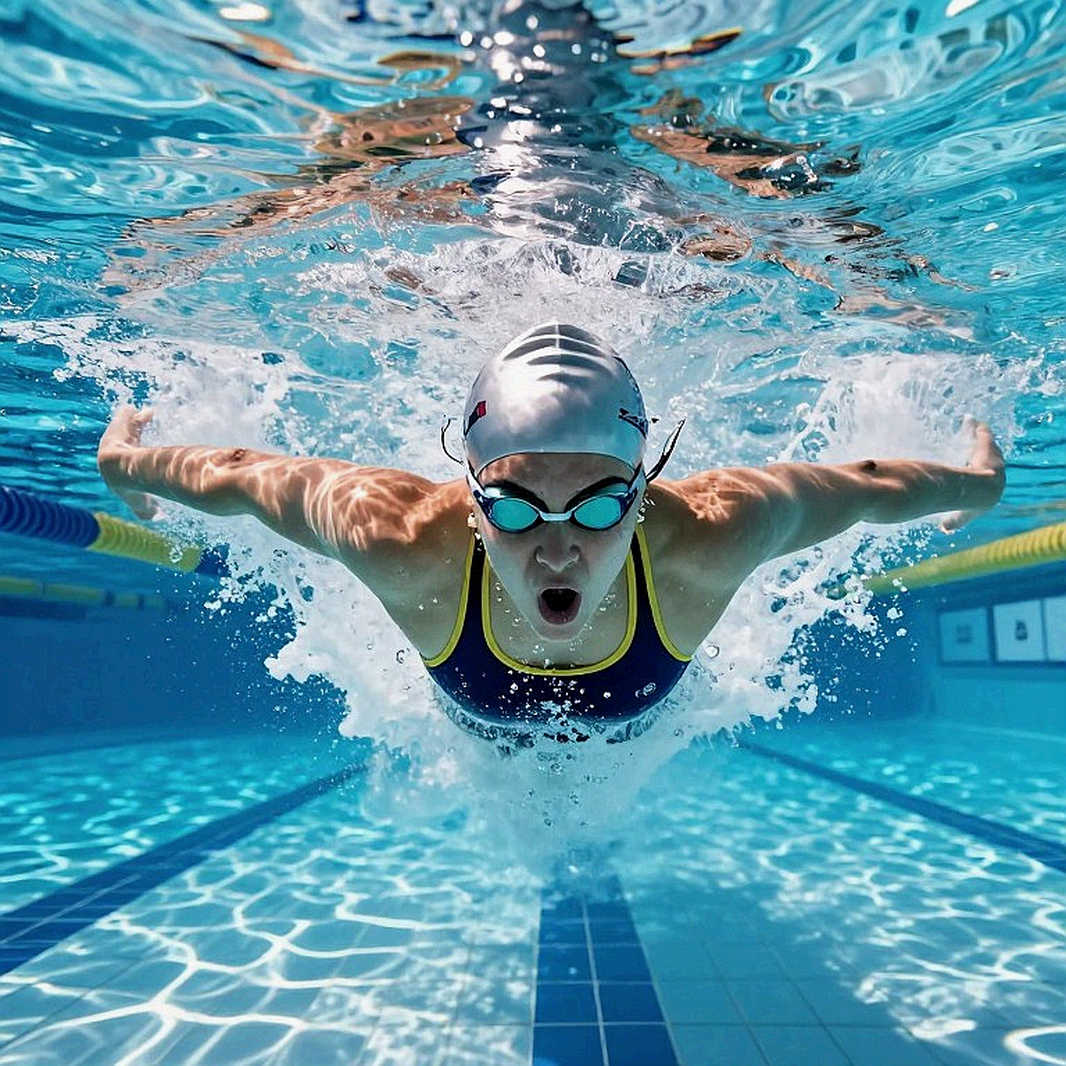
From these three numbers, I proposed a minimal monitoring protocol to the three centers. The protocol has four steps, none requiring expensive technology.
Step one: record each session's volume for each swimmer in a single spreadsheet, no software needed. Just volume in meters, session duration, and main contents. This is the most basic step, costing almost nothing, yet the least practiced.
Step two: measure a subjective pain scale before and after every session, on a 0-to-10 scale for the shoulder (and for the knee in breaststroke swimmers). No equipment needed. Just one cell in the spreadsheet each day.
Step three: once every two weeks, calculate the weekly volume increase versus two weeks prior. If it exceeds 10% per week, cut next week's volume to about 80% to create a small deload cycle. This is precisely the data point I believe can prevent most swimming shoulder injuries.
Step four: any swimmer with a pain score of 4 or above in two consecutive sessions is pulled from the main group for one week to do technical work at 40% volume, combined with scapular stabilization exercises. Not rest — only directed load reduction. Most parents and coaches fear rest, but this is not rest.
The three centers trialed this protocol over the final 14 months of the tracking period. After the first four months, there was no clear difference in performance. After eight months, the two centers with full compliance recorded a drop in moderate and severe shoulder cases from eleven to four across the same number of swimmers. The remaining center, which complied only with step one, showed no significant change in injury counts. This shows the effect comes from the protocol's systematic nature, not from any single step.
But I do not want to end the data section with a success number. I want to speak about the part the data overlooks — the part more important than all of it.
The question I put to myself after 14 months of tracking is: is it possible that most Vietnamese swimming injuries actually come not from coaching error, but from a sports culture that places results before the body? Looking back, I believe the answer leans more toward culture than technique.
Look at how centers handle a swimmer reporting shoulder pain. If there is no data system, the decision depends entirely on the coach. That coach is usually squeezed between three pressures that cannot be simultaneously satisfied: the center's committed training schedule, parental expectations for results, and the provincial or national competition calendar. Facing those three pressures, telling a swimmer to deload becomes a decision requiring courage, not an ordinary professional decision.
So I believe the solution does not lie in convincing each coach about science, but in embedding a data-monitoring system into competition structures. If the federation required each center to submit a monthly volume-tracking sheet as part of the athlete's file — not for judging results, but for protecting the athlete — the issue would shift from individual ethics to systemic standard. The history of world sports medicine shows that major changes in injury prevention all came from systemic standards, not from better coaches.
From Moscow to today, I have never seen a swimmer escape the decline curve of training volume. But I have seen many swimmers escape injury once volume was properly recorded. The distance between those two sentences is the entire job of an injury analyst.
Before I close, I want to overturn a common belief that anyone who has been involved in Vietnamese swimming has heard: that swimming is a sport that is "good for the joints," "low-injury," and "suitable for growing children." This belief has a true origin — water reduces joint load compared with running. But that comparison has the wrong target.
Swimming reduces compressive load on joints — true. But it replaces weight load with repetitive cycle load. And for connective tissue like tendon, repetitive cycle load is slowly but genuinely harmful. This explains why most swimming injuries are not compression injuries like running, but overuse injuries — tendinopathy. It also explains why swimming injuries are very common in growing young athletes.
In growing young athletes, there is a danger window I call the "bone–tendon lag." Long bones grow fast, sometimes exceeding tendon adaptation speed. This rhythm mismatch creates natural tendon tension, eroding the joint's safety margin. When rapid volume increases are added, that safety margin nearly disappears. This is why swimmers aged 12 to 17 carry the highest risk of shoulder and knee injuries of all age groups, even though in theory this should be the safest group.
This bone–tendon lag can be measured indirectly. In the three-center data, I calculated the ratio of a swimmer's height to their height six months earlier, and this ratio correlated with the rate of new shoulder pain reports. Put simply: a swimmer gaining height rapidly during a high-volume training phase carries higher injury risk. This is not a new finding in international sports medicine, but I have never seen it translated into swimming coaching practice in Vietnam.
From this, I draw three specific recommendations for centers.
First, during a young athlete's growth phase — usually lasting about 18 to 30 months — peak training volume should be capped at no more than 8% weekly increase over four consecutive weeks, with a deload week (about 70% to 80% of volume) after every three-week build. This is the most effective injury prevention method in the developmental phase.
Second, scapular and rotator cuff stabilization exercises should be added two to three times weekly, about 15 minutes each. This is a small investment compared with the cost of injury treatment, and has clear evidence from multiple international studies on reducing shoulder injuries in swimmers.
Third, speed sessions and technical sessions should be separated into different days, not placed side by side on the same day. This gives the shoulder a rest window and tendon regeneration between peak intensities.
These three recommendations are not new to the world, but they are not yet common in Vietnamese swimming. And this is what I believe is most important: the gap between Vietnamese swimming and the world in injury prevention does not come from a lack of knowledge, but from a lack of monitoring systems to turn knowledge into daily action.
The body is a closed system, but data is the key that opens it. This sentence is not a slogan. It is a technical description of how I view swimming injuries after 14 months of tracking.
At the close, I want to state clearly what I do not want to be misunderstood. I am not claiming swimming is a dangerous sport to avoid. Swimming gives athletes cardiovascular health, lung capacity, core strength, and persistence — values no other sport can fully replace. What I want is this: Vietnamese swimming should stop using the "softness" of water as a reason to ignore monitoring athletes' bodies. Because that very softness has hidden a harsh reality: in water, injury makes no noise, but it comes early and stays long.
If anyone reading this thinks it is a complaint, I want them to answer a single question. Across the three swimming centers you have known or worked at, how many swimmers self-reduced training volume because of shoulder pain, without anyone — coach, doctor, or parent — having a data file to verify that decision? The number you murmur to yourself is the answer. Not for any one center, but for an entire swimming nation.
Hải Phòng, Moscow, and COVID — three milestones that taught me injury never repeats itself. But what they also taught is this: injury is never a surprise either, if someone reads its data in the right sequence.